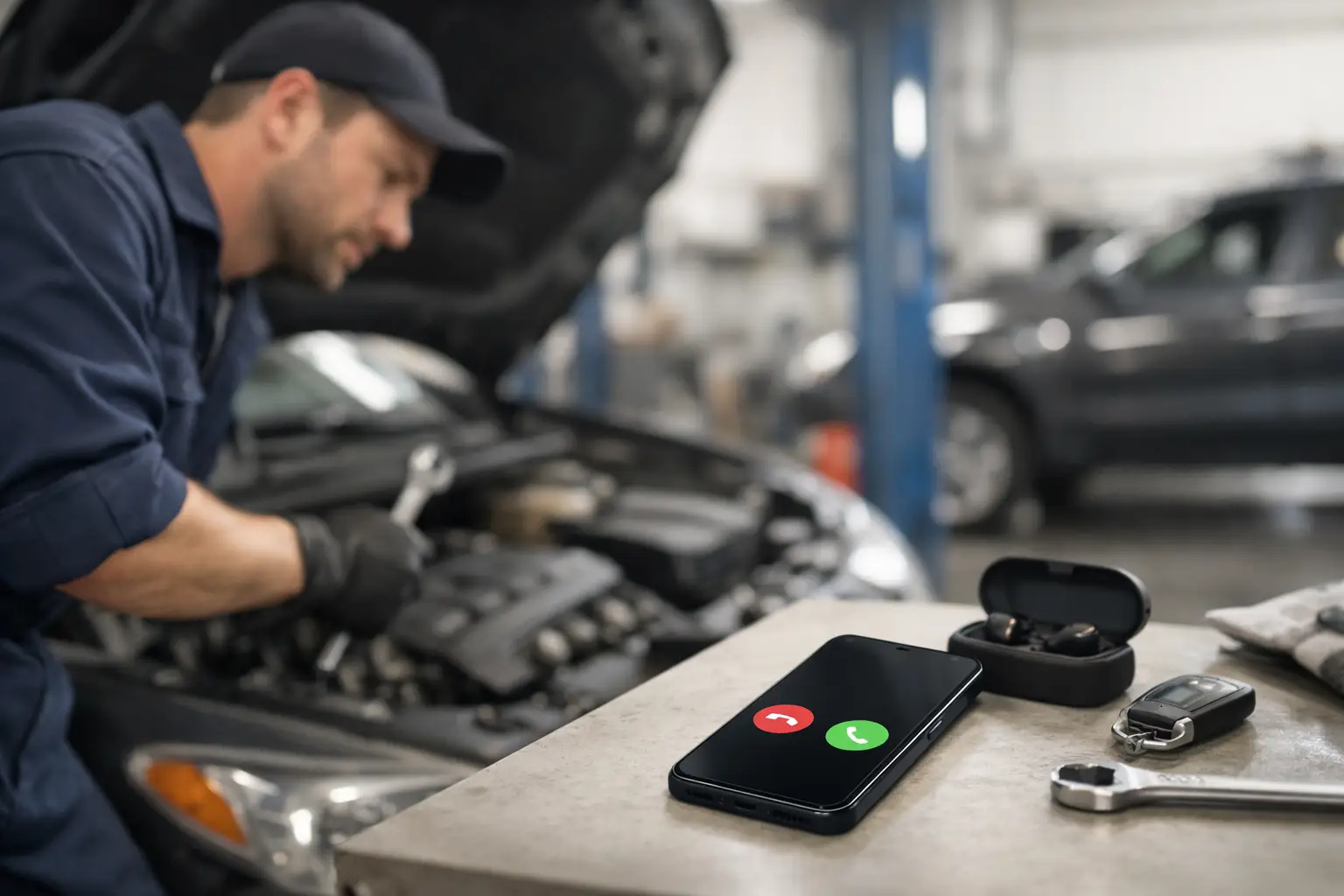
A customer’s check-engine light comes on during lunch. They call your shop, hear the phone ring, and get no answer. Within minutes, they are calling the repair shop across town.
That is the revenue problem mechanic missed call automation is built to solve. It does not just send an apology text after the fact. Done well, it turns a missed call into an immediate, natural conversation that captures the vehicle issue, qualifies the job, and gets the customer booked while the need is still urgent.
For independent repair shops and multi-location service centers, missed calls are rarely a customer service issue alone. They are a capacity problem with a direct effect on car count, labor utilization, and the return on every marketing dollar you spend.
Why missed calls cost auto shops more than they think
Phones ring when your team is least available to answer them. Advisors are checking in vehicles, technicians need approvals, customers are standing at the counter, and the person who normally picks up is out sick or on another call. No one is intentionally ignoring a new lead. But the caller does not know that.
They only know that they need an oil change, a brake inspection, a diagnostic appointment, or a second opinion. If another shop answers first, convenience usually wins. The lost opportunity may begin as a $90 service, but it can become a lost repair order, future maintenance, referrals, and years of customer lifetime value.
The cost is even higher when calls come from paid search, local service ads, or campaigns promoting seasonal work. You have already paid to create demand. Letting that lead go cold because the front desk was busy is the definition of wasted acquisition spend.
A manual callback process helps, but it has limits. A callback 20 minutes later can be too late. A callback at the end of the day is often just a voicemail. And relying on staff to remember every missed call creates inconsistent follow-up exactly when your shop is busiest.
What mechanic missed call automation should actually do
Basic missed-call text-back tools send a generic message such as, “Sorry we missed you. How can we help?” That is better than silence, but it still leaves most of the work with the customer and your team.
A stronger system starts the conversation immediately and keeps it moving. When an incoming call is missed, the customer receives a personalized SMS response within seconds. The message identifies the shop, acknowledges the call, and asks a simple question that makes it easy to reply.
From there, conversational AI can handle the first layer of intake. It can ask what is going on with the vehicle, whether the car is drivable, the make and model, preferred appointment timing, and whether the customer is an existing client. The conversation should feel helpful, not like a rigid web form dropped into a text thread.
The goal is not to let AI diagnose a transmission issue or promise a price before inspection. The goal is to remove friction between an unanswered phone call and a qualified appointment. When a question requires a human, the system should flag it and route the conversation to the right person with the context already captured.
The best workflow ends in an appointment, not a booking link
Sending a booking link sounds efficient, but it often creates another reason to abandon the process. The customer has to open a page, find a time, enter details, and hope the appointment request reaches the shop.
In-conversation scheduling is different. The system can ask, “Would tomorrow morning or Thursday afternoon work better?” Once the customer chooses, it checks the shop’s available calendar or CRM and confirms the appointment in the same text exchange.
That matters because most auto service customers are not looking for more admin. They want to know whether you can get them in and what to do next. A short, responsive exchange wins more often than a link that asks them to complete another task.
Build the workflow around the calls your shop receives
Not every missed call deserves the same follow-up. A caller looking for tire availability needs a different path than someone whose vehicle will not start. Your automation should recognize common intent and gather the information your advisors need to take the next step.
For most repair shops, the workflow should cover five practical scenarios:
- New service requests, such as maintenance, brakes, diagnostics, tires, and repairs.
- Urgent vehicle issues, where the customer needs guidance on towing, drop-off, or the earliest available inspection.
- Estimate and status calls from existing customers, which may need a fast handoff to an advisor.
- After-hours calls, when immediate acknowledgement can hold the lead until the shop opens.
- Overflow calls during peak hours, so a busy front desk does not become a blocked pipeline.
The language matters. A text that says, “Please provide your VIN, year, make, model, trim, mileage, and concern,” will feel like paperwork. A better conversation begins with the concern: “Sorry we missed you. What’s going on with your vehicle?” The system can gather the rest naturally as the conversation develops.
There is a trade-off here. Ask too few questions, and the appointment arrives without enough context. Ask too many, and the customer stops replying. The right setup captures only what is needed to book correctly and helps your team prepare before the vehicle arrives.
Speed is the advantage, but accuracy protects the customer experience
Fast follow-up is valuable because intent declines quickly. But speed without guardrails can create operational headaches. Your system should not promise same-day availability if the schedule is full, quote repair pricing without a proper inspection, or imply that a serious safety concern can wait.
This is why the automation needs rules tailored to your shop. It should use your service hours, appointment types, calendar availability, locations, and escalation preferences. If a customer mentions brake failure, smoke, overheating, or a vehicle that is unsafe to drive, the response should follow your approved safety and escalation process.
It should also know when to stop. Existing customers asking about a repair status, warranty dispute, or complex estimate may need a human immediately. Automation earns trust when it handles routine follow-up exceptionally well and gets out of the way when expertise is required.
Connect missed calls to the systems your team already uses
A missed-call system that lives outside your operating workflow creates more work than it saves. Advisors should not have to copy text conversations into the CRM, search for appointments manually, or wonder whether a lead was contacted.
The right implementation connects with your phone system, calendar, CRM, and customer records where possible. That gives your team a clear view of who called, what they need, how the conversation progressed, and whether an appointment was booked. It also prevents duplicate outreach when an advisor does call back.
This is where a done-for-you approach matters. Every shop has different appointment rules, service categories, software, and staffing patterns. Breightly AI builds custom workflows around those realities, so the automation supports your operation instead of forcing your team into a generic process.
Measure the revenue, not just the messages
Do not judge mechanic missed call automation by how many texts it sends. Judge it by the leads it recovers and the appointments it creates.
Track missed calls by source, response time, conversation rate, qualified lead rate, booked appointment rate, show rate, and completed repair orders. If calls from local service ads book at a higher rate than calls from organic search, that is useful information for your marketing spend. If after-hours callers consistently book for the next morning, you have proof that availability was previously costing you jobs.
Also compare recovered appointments with no-shows and low-value inquiries. More appointments are not automatically better if your schedule fills with work that does not fit your shop. A well-configured workflow can prioritize the services, locations, and appointment windows that make commercial sense.
The strongest result is not a busier inbox. It is a front desk that spends less time chasing callbacks while your bays receive more qualified work.
Start with the calls you are already losing
You do not need to rebuild your entire customer experience to stop losing missed-call revenue. Start by identifying when calls are missed, what happens afterward, and how long it takes before anyone responds. Listen to a sample of the voicemails and look at the call sources. The leak is usually more visible than owners expect.
Then design the first response around one job: keep the customer engaged long enough to understand their need and offer the next available step. Test the conversation, review the handoffs, and measure booked work against your current baseline.
Every missed call is a customer telling you they are ready to talk. The shop that responds first, clearly, and helpfully has a far better chance of earning the keys.