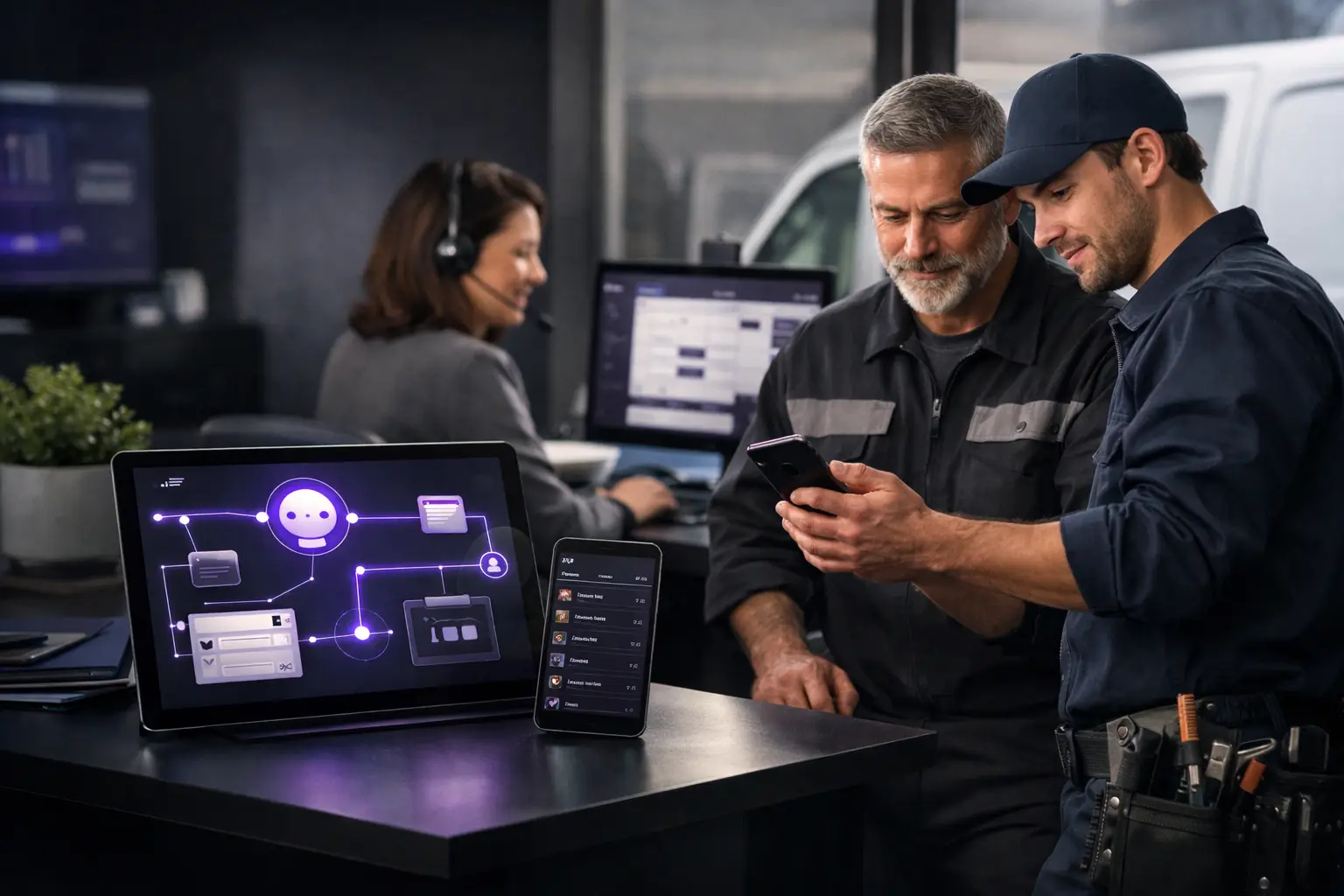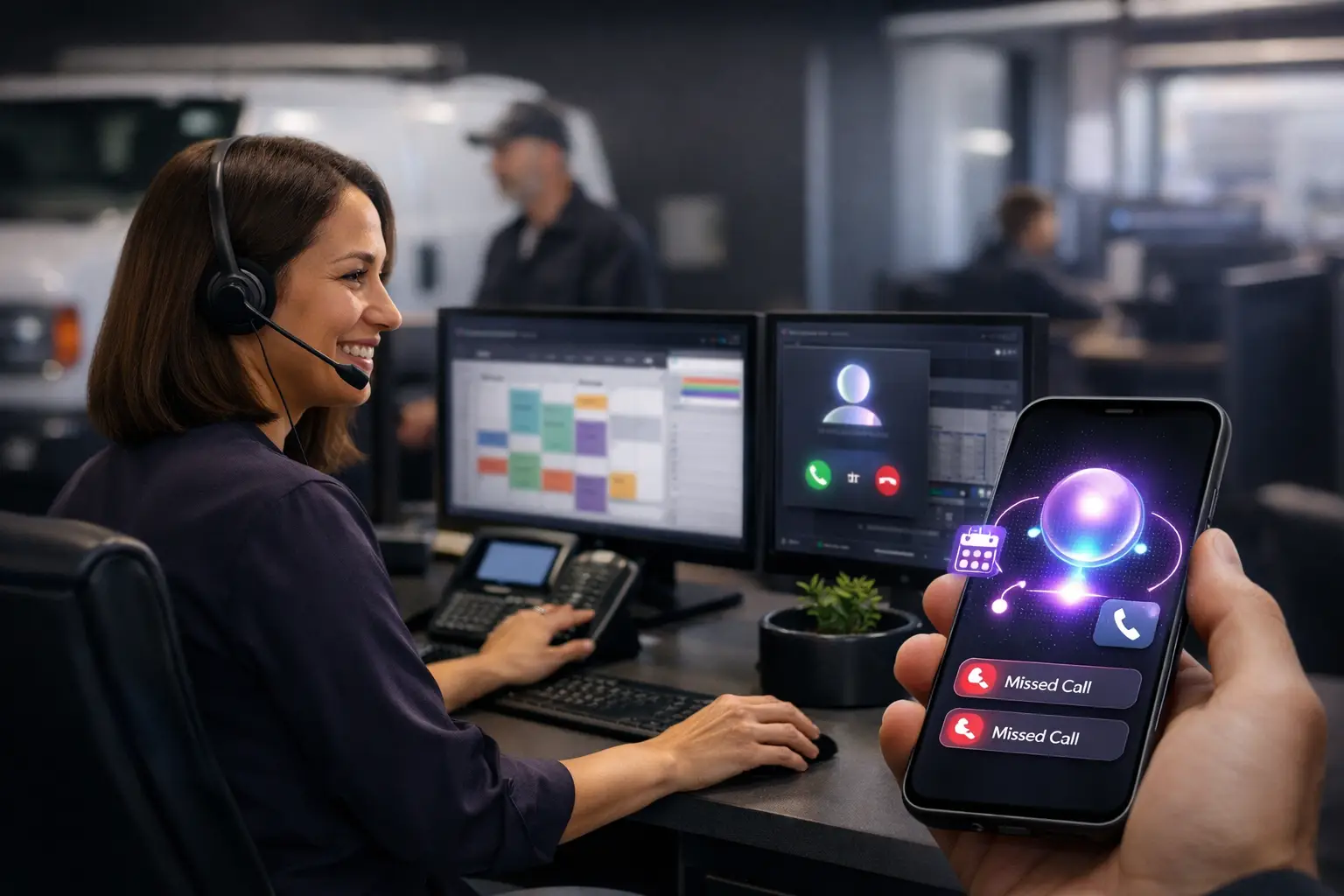
A homeowner with a leaking water heater is not planning to leave a voicemail and wait until tomorrow. They are calling the next company. That is why missed call recovery is not a customer service extra. It is a revenue system for local service businesses that want every marketing dollar, referral, and inbound inquiry to have a real chance to become a booked job.
For HVAC, plumbing, electrical, auto repair, and similar appointment-driven businesses, missed calls happen for understandable reasons. Your team is assisting a customer at the counter, driving between jobs, handling an emergency, or already on another call. The problem is not that calls get missed. The problem is what happens next.
If the follow-up is delayed, inconsistent, or limited to a generic voicemail, a high-intent prospect can disappear before your team ever gets a conversation started.
What Missed Call Recovery Actually Means
Missed call recovery is the process of identifying unanswered calls and immediately starting a useful follow-up conversation. The goal is not simply to send an automatic message that says, “Sorry we missed you.” The goal is to make it easy for a prospect to explain what they need, get answers, qualify for the right service, and schedule an appointment.
A strong recovery workflow treats the missed call as the beginning of a sales conversation, not the end of one. For example, a caller who needs an AC repair should receive a fast text asking how Breightly AI can help, then be able to describe the issue in plain language. The conversation can collect the right details, confirm service area and timing, and move toward an appointment in the calendar your team already uses.
That distinction matters. A one-way apology text may prompt a callback. A natural, multi-message conversation gives the customer a lower-friction path to booking.
Why Unanswered Calls Create Expensive Lead Leakage
Most local service businesses already pay to create demand. They invest in ads, websites, local visibility, referral relationships, and branded vehicles. When an interested customer calls, the business has already cleared the hard part: earning attention and intent.
A missed call can turn that investment into wasted acquisition cost if there is no immediate recovery process. The longer a lead waits, the more likely they are to contact another provider, forget why they called, or decide to put off the work.
There is also an operational cost. When staff members return missed calls in batches, they often start with little context and no clear view of which prospects were reached, qualified, booked, or lost. That makes follow-up dependent on individual effort instead of a repeatable system.
The answer is not to expect your front desk to be available every second of every day. It is to give them a system that covers the gap consistently, preserves the conversation history, and hands off qualified opportunities at the right moment.
The Workflow That Turns Missed Calls Into Appointments
Effective missed call recovery has four connected stages. If one stage is weak, the next stage has less to work with.
1. Detect the missed call immediately
The system first needs a reliable trigger. When an inbound call is unanswered, the follow-up should begin within moments, not after a receptionist reviews a report later that afternoon.
Speed is especially valuable for urgent service categories. A prospect who calls about a broken furnace, backed-up drain, or electrical issue is looking for a response now. A fast text confirms they reached a real business and gives them a simple next step while the need is still active.
2. Start with a human-sounding message
The first message should be short, direct, and helpful. It should identify the business, acknowledge the missed call, and invite the customer to share what they need. Avoid robotic scripts that make the caller feel like they have entered a support queue.
A useful opening might ask whether they need repair, installation, maintenance, or a quote. The exact wording should fit the business and service line. A plumbing company may need to know whether there is active water damage. An HVAC company may need to know whether the system is not cooling, not heating, or making an unusual noise.
This is where conversational AI can make a meaningful difference. Rather than forcing a caller through a long form or pushing a booking link immediately, it can respond naturally to what the prospect says next.
3. Qualify without creating friction
Not every caller needs the same questions. An emergency repair request should move faster than a routine maintenance inquiry. A commercial prospect may require different routing than a residential customer. The best workflow asks only for information that helps the business respond accurately.
That can include the service needed, location, preferred timing, equipment type, urgency, and whether the person is an existing customer. The conversation should feel like a capable coordinator gathering the basics, not an interrogation.
Qualification also protects your team’s time. When a sales rep or dispatcher takes over, they should see the customer’s need, relevant details, and the history of the exchange. That makes the handoff cleaner and helps the customer avoid repeating themselves.
4. Schedule inside the conversation
A prospect who is ready to book should not have to wait for a callback or hunt through a generic scheduling page. In-conversation scheduling lets the system offer available times, confirm the chosen slot, and place the appointment directly on the existing calendar or CRM.
This is not always the right path. Some jobs need a live dispatch decision, a detailed estimate conversation, or a technician’s review before anything can be scheduled. In those cases, the workflow should route the lead to the right person with context rather than pretending every request can be booked automatically.
The point is to reduce unnecessary back-and-forth. When a lead is ready to move, the process should support that momentum.
What to Build Into Your Recovery Process
A missed-call text alone is better than silence, but the real value comes from the rules behind it. Your workflow should account for business hours, emergency calls, duplicate callers, existing customers, and requests that need human attention.
For many service businesses, the most useful setup includes a fast SMS response after an unanswered call, multi-message follow-up if the customer does not reply, intelligent qualification, and calendar or CRM updates. Voice-agent workflows can also help handle incoming calls when a customer prefers speaking to someone, especially outside normal office coverage.
Your team should define clear escalation rules. For instance, a suspected gas leak, electrical hazard, or active flooding scenario may need an immediate human alert and emergency guidance based on your company’s policies. A routine tune-up request can move through a standard scheduling flow. The workflow should reflect how your business actually operates.
It also needs proper ownership. Someone should regularly review recovered conversations, booking outcomes, unanswered texts, and lead sources. This is how you find practical friction, such as a question that confuses callers, a service area rule that is too broad, or appointment availability that is not syncing correctly.
Measure More Than the Number of Texts Sent
A recovery system should be judged by commercial outcomes, not automation activity. Sending hundreds of messages means little if the messages do not produce qualified conversations or booked appointments.
Track missed calls by source, response time, reply rate, qualification rate, appointments set, and show rate where applicable. Compare how different lead sources behave. A paid search caller, a repeat customer, and a referral may need different messaging and follow-up timing.
Also look at what happens after booking. Did the appointment become a completed service call, estimate, or sale? That connection helps leaders understand which recovery paths create pipeline value and which need adjustment.
Do not expect every missed call to convert. Some callers misdial, some are price-shopping, and some have needs outside your service scope. The opportunity is not perfection. It is making sure legitimate prospects receive a prompt, professional response instead of slipping away because the phone rang at the wrong moment.
Make the System Fit the Team You Already Have
The best missed call recovery process supports your people rather than adding another dashboard for them to manage. It should work with your existing CRM, calendar, dispatch process, and communication rules wherever possible.
That is why implementation matters. A generic automation can send messages, but a tailored workflow can reflect your services, coverage areas, intake questions, team availability, and escalation paths. It can also preserve customer context across SMS, WhatsApp, and voice interactions where those channels make sense for your business.
Breightly AI builds these follow-up systems around real service-business workflows, with human-sounding conversations and custom integrations designed to move leads toward the next right action. The objective is straightforward: give every caller a fast path to a helpful response, whether your staff is available at that exact second or not.
Your next missed call does not have to become a lost opportunity. Start by mapping what happens in the first five minutes after an unanswered call, then build the response your customers would hope to receive.
Ready to turn more conversations into booked appointments? Book a discovery call with Breightly AI and see how conversational scheduling can fit into your existing workflow.