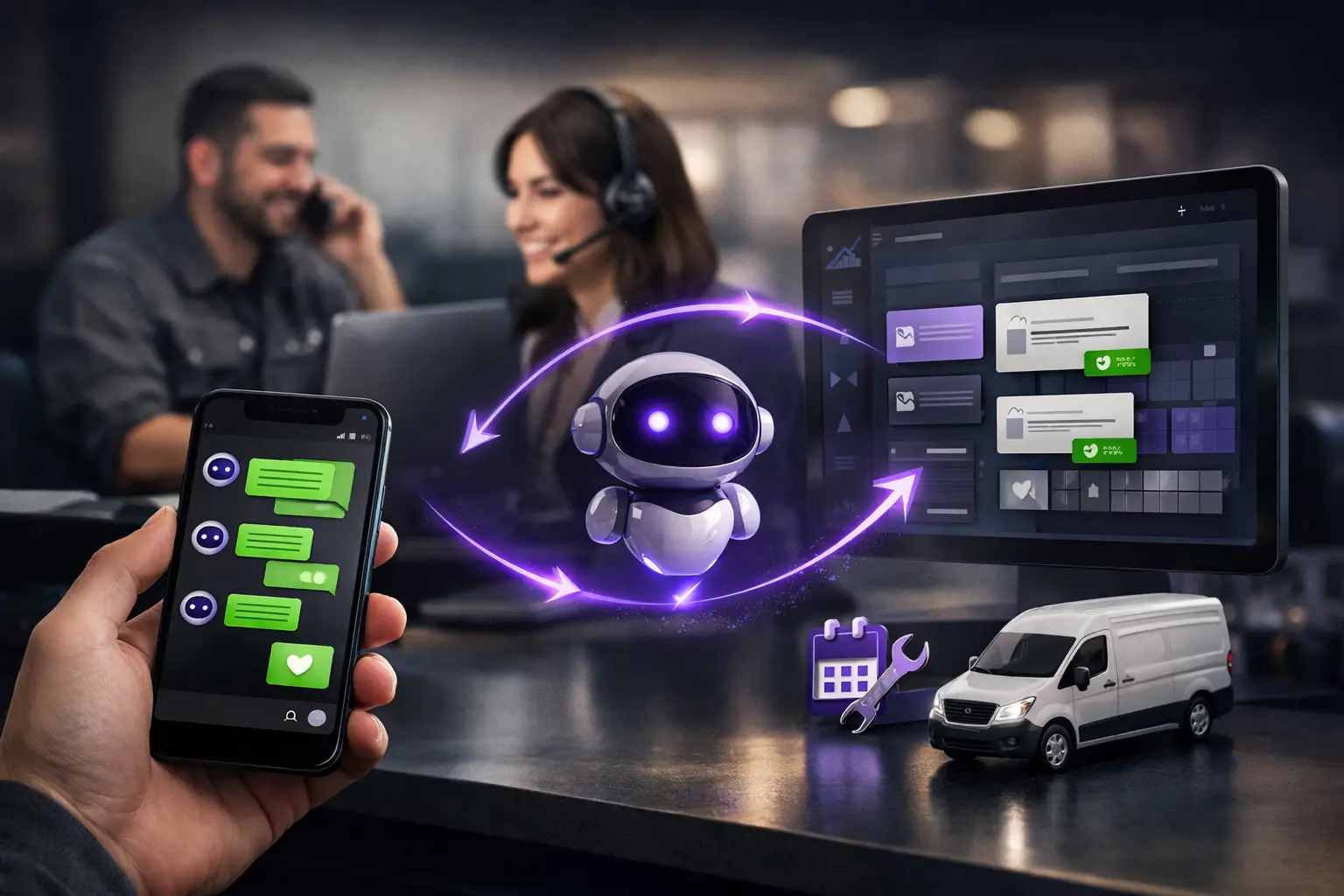
A homeowner who asks, “Can someone come out this afternoon?” is not looking for a calendar link and a homework assignment. They want a clear answer, a convenient time, and confidence that the job is being handled. Conversational appointment scheduling software gives local service businesses a way to respond like a capable coordinator at the exact moment a lead is ready to act.
For HVAC companies, plumbers, electricians, mechanics, and other appointment-driven teams, booking is rarely a one-click event. Prospects ask about availability, service areas, urgency, pricing ranges, equipment issues, and whether a technician can handle a specific problem. If those questions sit unanswered or get passed between people, the lead can cool off before the calendar ever comes into play.
The goal is not to add another software dashboard for your team to manage. The goal is to turn more incoming conversations into qualified appointments while keeping your current calendar, CRM, and sales process intact.
What conversational appointment scheduling software does
Conversational appointment scheduling software uses AI-powered SMS, WhatsApp, or voice workflows to engage leads in a natural back-and-forth conversation. Instead of immediately sending a generic booking link, it can answer approved questions, collect key job details, qualify the prospect, offer available times, and place the appointment directly into the right calendar or CRM.
That difference matters because service leads often need context before they commit. A customer with an AC issue may need to confirm that you serve their ZIP code and handle their system type. A plumbing lead may need to explain whether the issue is urgent. A repair customer may need to coordinate around work hours.
A well-designed conversation gives them a path forward without making them repeat themselves to multiple people. It also captures useful information for the team before the appointment begins.
It is more than a booking link
Booking links are useful when someone is already convinced, knows what they need, and is comfortable selecting a slot without help. That is not every lead, especially when the request is urgent, complicated, or high value.
A conversational workflow meets prospects where they are. It can acknowledge the request immediately, ask the next relevant question, and guide the person toward an available appointment. If the conversation requires a human, the system should hand it over with context rather than pretending automation can solve every situation.
This creates a better experience for the customer and a cleaner pipeline for the business. Your staff spends less time chasing basic details and more time handling exceptions, complex estimates, and booked opportunities.
Why response speed affects appointment volume
Most lead leakage does not happen because a business lacks demand. It happens in the gap between inquiry and response. Someone fills out a form after hours, texts from a paid ad, calls while the office is busy, or replies to a follow-up message while the team is in the field. By the time someone gets back to them, their attention has shifted.
Immediate engagement protects the value of the lead source you already paid for. It also creates a more professional first impression. A prospect does not need to know whether a message is being handled by an AI-assisted workflow or a coordinator. They care that the response is relevant, helpful, and moves their request forward.
The strongest systems do not stop after the first reply. They handle multi-message conversations, follow up when a prospect goes quiet, and keep the thread focused on the next step. That persistence matters because many customers are distracted, comparing options, or unable to respond right away.
The workflow behind a better booking experience
For a local service business, the best scheduling workflow is specific to how the operation actually runs. It should reflect service areas, business hours, appointment types, technician capacity, and the questions your team needs answered before dispatching or selling.
A practical flow usually starts when a lead arrives through a form, ad campaign, missed call, referral source, inbound text, or existing customer list. The system responds immediately in the same channel whenever possible. It confirms the request, asks a focused qualifying question, and identifies the right appointment path.
For example, an electrical contractor may need to know whether the customer is requesting a panel upgrade, troubleshooting, or a new installation. A mechanic may need the vehicle make, model, and issue. An HVAC company may need the property type and whether the system is not cooling, not heating, or showing an error.
Once the lead is qualified, the software checks live availability through the existing calendar or CRM. It can present a small number of relevant options, confirm the selected slot, create the appointment, and send confirmation details. The conversation stays human-sounding because it reacts to what the prospect actually says instead of forcing every person through the same rigid script.
That is where custom integration work earns its place. A generic automation may be acceptable for a simple business. But when scheduling rules, territories, job types, or CRM fields matter, the workflow needs to be built around the operation, not the other way around.
What to look for in conversational scheduling software
Not every AI scheduling tool is designed for the realities of local service sales. Before adopting one, look beyond a polished demo and ask how it will perform when a real prospect sends an incomplete message at 8:30 p.m. or changes their preferred time three messages later.
First, assess conversational quality. Messages should be clear, concise, and aligned with your brand. The system should understand common variations in how customers describe their needs, while staying within approved business information. Overly robotic wording can create friction at the moment you are trying to build trust.
Second, confirm that scheduling happens inside the conversation. If every inquiry is pushed toward a link, you may lose people who would have booked with a little guidance. In-conversation scheduling lets the workflow answer a question, handle an objection, and present times without breaking momentum.
Third, review integration depth. Your calendar availability, CRM stages, customer records, and notification process should remain accurate. A workflow that books appointments but creates duplicate records or leaves dispatch without job details can create more work than it removes.
Fourth, make sure human escalation is part of the design. AI can handle repetitive communication at scale, but your team should be able to take over when a lead has a complex question, a sensitive issue, or a high-value opportunity that needs personal attention.
Finally, consider implementation support. Service owners should not have to become prompt engineers or build complex automations between jobs. A done-for-you setup can move faster when the provider learns your service categories, qualification needs, calendar rules, and preferred handoff process upfront.
Where the biggest opportunities often sit
New inbound leads are the obvious use case, but they are only one source of appointment opportunities. Your existing customer database may include people due for maintenance, customers who postponed work, past estimates that never closed, and former customers who have not heard from you in months.
Conversational workflows can re-engage those audiences with relevant outreach, then handle the replies and booking process at scale. That can support maintenance scheduling, upsells, cross-sells, review requests, and reactivation campaigns without asking your staff to manually text hundreds of contacts.
The trade-off is relevance. Broad, poorly timed outreach can feel generic. The best campaigns use real customer history, sensible timing, and a clear reason to respond. A customer who previously scheduled seasonal maintenance should receive a different message than someone who requested an estimate six months ago.
How to implement it without disrupting your team
Start with one high-value workflow rather than attempting to automate every customer interaction at once. For many businesses, that means new web leads, missed calls, or paid campaign inquiries where response speed has a direct impact on booked appointments.
Define what the workflow needs to collect before it offers a slot. Keep it focused. Too many questions can slow the conversation, while too few can leave your team unprepared. Then map the escalation points: which questions require a person, who receives the handoff, and how quickly they should respond.
Next, test calendar logic carefully. Confirm that appointment types, buffers, service areas, capacity limits, and confirmation messages match the way your business actually operates. A booking system should protect operational capacity, not simply fill every open-looking slot.
Breightly AI approaches this as a managed follow-up engine, combining human-sounding conversations, dynamic scheduling, and custom-coded CRM or calendar integrations so teams can keep working in the systems they already use. The right implementation should feel like an extension of your front office, not a separate process your people must remember to check.
The real test is simple: when a qualified prospect reaches out at an inconvenient time, can your business respond, guide the conversation, and secure the next step before interest fades? Build for that moment, and appointment scheduling becomes a revenue system rather than another administrative task.
Ready to turn more conversations into booked appointments? Book a discovery call with Breightly AI and see how conversational scheduling can fit into your existing workflow.